
 ES
ES  FR
FR  EN
EN Latest From Immigria
We regularly update you on all the nuances of the immigration process, as well as life in Canada, and the US.
What to Do After a PR Rejection in Canada: Real Case, Real Results
What’s the Difference Between a Refusal and a Rejection in Canadian Immigration?
If you've submitted an immigration application to IRCC (Immigration, Refugees and Citizenship Canada) and received a negative outcome, it's essential to understand whether it was a refusal or a rejection because the next steps can vary significantly.
Although many people use these terms interchangeably, IRCC treats them differently. Here's what each one means, and how understanding the difference can help you move forward with confidence.
Refusal vs. Rejection: What IRCC Really Means
A refusal means your application was reviewed by an officer, but it did not meet the eligibility or admissibility requirements of the program.
For temporary residency applications, refusals often result from not demonstrating strong enough ties to your home country, providing insufficient proof of financial support, or failing to clearly convey your intention to leave Canada at the end of your authorized stay. These factors can raise concerns about your credibility or the risk of overstaying.
In the case of permanent residency applications, refusals are commonly due to missing or incomplete documents, the absence of required translations, or failure to follow specific formatting guidelines. Additionally, applicants may not meet the criteria outlined by the program they applied under.
In such cases, you will receive a formal refusal letter summarizing the main reasons for the decision. However, this letter often provides only limited detail. To gain a clearer understanding of how your application was assessed, you can request your GCMS notes (Global Case Management System notes) through an ATIP (Access to Information and Privacy) request. These internal notes reveal the immigration officer’s detailed observations and reasoning behind the refusal, which can be critical in deciding whether to reapply or explore alternative pathways.
If you are outside Canada and unable to request the notes yourself, you can appoint someone to do so on your behalf, such as Immigria, our firm, who is authorized to submit the request for you.
A rejection, on the other hand, means your application was not accepted for processing in the first place. This usually happens because it was incomplete for example, a missing signature, incorrect fee, or an omitted document. The application is returned, and no eligibility assessment is made.
The good news? If your application was rejected, you may be able to resubmit it after addressing the issues that led to the rejection. In some cases, particularly for permanent residency applications submitted through the PR Portal, a corrected submission may be allowed immediately without incurring additional fees. However, for Express Entry applicants, a new Invitation to Apply (ITA) is required, even if the original application was rejected due to a technicality or missing document. Resubmission is possible, but it must follow the full process, including re-entering the pool and waiting for a new ITA.
Real Case: Rodrigo and Licia’s Path to Permanent Residency
To better understand how persistence and proper support can make a difference, let us share the story of Rodrigo and Licia, a couple originally from Brazil, now living in Ontario.
Rodrigo came to Canada with a work permit supported by an LMIA (Labour Market Impact Assessment) to work for a Canadian employer and Licia joined him with an open work permit as his spouse.
Their journey to permanent residency through Express Entry was not without its challenges. Their initial application was refused due to documentation issues, and despite their best efforts, they faced continued setbacks before achieving a successful outcome.
Since we were already assisting Rodrigo’s employer, he reached out to us for guidance after facing continued difficulties.
Critical issues leading to the refusal of Express Entry permanent residence applications are often avoidable, and unfortunately, quite common. In some cases, applicants submit only translated copies of police certificates or other required documents without including the originals. Another frequent issue is the Educational Credential Assessment (ECA) being issued for general purposes rather than specifically for immigration, which makes it ineligible for use in the application.
We worked closely with Rodrigo and Licia to address these issues, rebuild their application properly, and navigate the process with clarity and care. With persistence and the right documentation in place, their efforts paid off. Although it was a complicated situation for them, we are proud to have supported them with clarity and commitment, and today, Rodrigo and Licia are now proud Permanent Residents of Canada.
They were kind enough to share a 5-star review on Google, expressing their satisfaction with our services and the care they received during the process.
- Ceren and Melissa were very helpful during the whole application process, and stuck with us even when it seemed that the rules would change every month. We wouldn't have got our permanent residency without their help.
Don’t Let a Rejection or Refusal Stop You
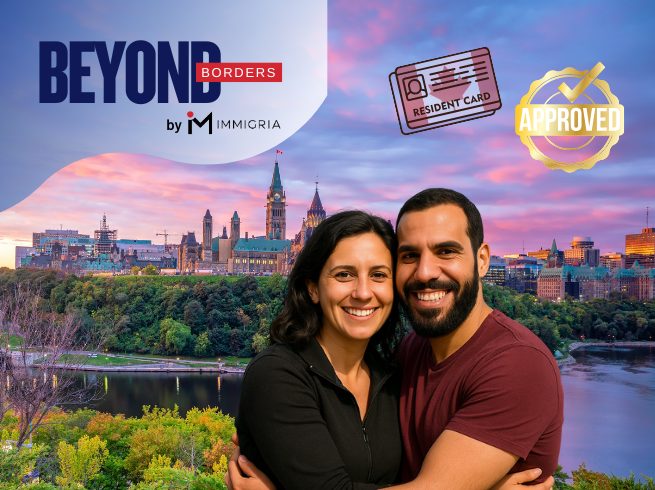
Rodrigo and Licia’s story is a reminder that even after a rejection, there’s a path forward. Sometimes it takes a another look to spot what went wrong, and a solid strategy to get it right.
It’s important to note that refusals, unlike rejections, are more complex. These cases require detailed analysis, may involve deeper eligibility concerns, and often need to be rebuilt from the ground up, sometimes adding new supporting elements.
Need Help After a Refusal or Rejection?
Whether you're dealing with a rejected Express Entry application, a refused visitor visa, or are unsure how to proceed, our team is here to evaluate your case.
At Immigria, we understand how discouraging it can be to receive a refusal or rejection, but we also know that many cases can succeed with the right guidance. We specialize in resubmissions, identifying errors, interpreting GCMS notes, addressing officer concerns, and creating a stronger application strategy tailored to your situation.
👉 Book a consultation with a certified immigration consultant today and take your next step with clarity and confidence.