
 ES
ES  FR
FR  EN
EN Latest From Immigria
We regularly update you on all the nuances of the immigration process, as well as life in Canada, and the US.
Why Language Skills Can Make or Break Your Canadian Immigration Strategy
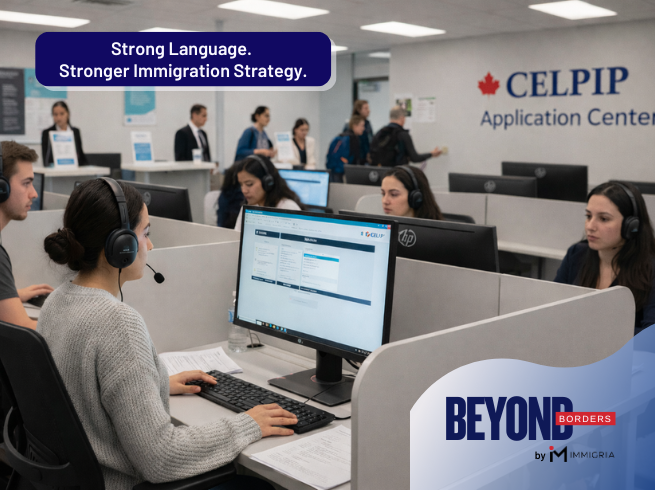
If there is one factor that consistently separates successful Canadian immigration applicants from those who remain stuck in the system, it is language proficiency.
Not job titles.
Not age alone.
Not even education by itself.
Your English and/or French skills are often the deciding force behind eligibility, competitiveness, and long-term success in Canada. As immigration pathways become more selective, language is no longer just a requirement, it is a strategy.
In this article, I will walk you through why language skills matter so much, how they directly influence your immigration outcomes, and how a focused language plan can dramatically improve your chances of success, without exaggeration, false promises, or unrealistic timelines.
What Do Language Skills Really Mean in Canadian Immigration?
When immigration authorities talk about “language,” they are not referring to casual conversation or everyday fluency. They measure language ability using standardized tests and the Canadian Language Benchmark (CLB) and/or Niveaux de compétence linguistique canadiens (NCLC) systems.
Your test results determine:
-
Whether you are eligible for a program
-
How competitive your profile is
-
Which immigration pathways are realistically available to you
Language ability is assessed separately in:
-
Listening
-
Reading
-
Writing
-
Speaking
Each skill matters. A weakness in just one area can limit your options.
Language as a Gatekeeper: Eligibility Comes First
For many Canadian immigration programs, language is not flexible. It is a non-negotiable threshold.
If you do not meet the minimum required level, your application simply cannot move forward, no matter how strong the rest of your profile may be.
For example:
-
The Federal Skilled Worker Program under Express Entry requires CLB 7 in all four abilities in your first official language.
-
Programs such as the Canadian Experience Class, Federal Skilled Trades, and various Provincial Nominee Program (PNP) streams may accept lower CLB levels, often around CLB 5, depending on the pathway and occupation.
Language is the first filter. Before points, before rankings, before invitations, eligibility depends on it.
Language Is One of the Biggest CRS Point Drivers
Once eligibility is established, language becomes one of the most powerful scoring tools in the system.
Within Express Entry, language contributes a substantial portion of your Comprehensive Ranking System (CRS) score:
-
Your first official language can provide up to 136 CRS points (single applicants) or 128 points (with a spouse).
-
Strong language results can unlock up to 100 additional CRS points through skill-transferability combinations.
-
French proficiency, even at intermediate levels, can add 50–75 extra CRS points, on top of English scores.
In many cases, language alone can account for over one-third of a competitive CRS score.
CLB 9: Where Language Becomes a Multiplier
One of the most misunderstood aspects of Canadian immigration is how language interacts with education and work experience.
Language does not simply add points. At higher levels, it multiplies them.
Moving from approximately CLB 7–8 to CLB 9 can:
-
Trigger skill-transferability bonuses
-
Add 40 or more CRS points almost instantly
-
Strengthen combinations with foreign or Canadian work experience
-
Maximize the value of your education credentials
This is why we often see applicants remain stuck for months, until a single language improvement changes everything.
Why Language Is the Fastest Way to Improve Your Immigration Profile
Unlike age or work experience, language is one of the few immigration factors you can actively improve in a short period of time.
With focused preparation:
-
Retaking approved tests can lead to meaningful improvements in 4–6 weeks
-
A single-band increase in one skill can significantly raise your CRS score
-
Language improvement often delivers 50–100+ CRS points, depending on your profile
This is why, as immigration consultants, we often describe language as the highest-return investment available to many applicants.
How Language Shapes Your Immigration Pathway Options
Language scores do more than affect points. They shape which strategies are realistic.
Express Entry Candidates
Higher CLB levels improve:
-
CRS competitiveness
-
Access to category-based draws
-
Overall invitation frequency
Provincial Nominee Programs (PNPs)
PNP streams typically require:
-
CLB 5–7 minimums, depending on the occupation
-
Higher language scores for competitive or employer-driven streams
French-Language Pathways
French proficiency opens doors to:
-
Francophone category draws with lower CRS cut-offs
-
Additional provincial and regional opportunities
-
Greater geographic flexibility within Canada
Family Sponsorship
While sponsorship programs rarely impose formal language minimums, limited language ability can complicate:
-
Employment opportunities
-
Settlement and integration
-
Long-term goals such as citizenship
Language Beyond Immigration Approval: Life, Work, and Citizenship
Language continues to matter long after your application is approved.
Stronger English or French supports:
-
Better employment opportunities
-
Higher earning potential
-
Workplace safety and communication
-
Easier access to healthcare, education, and public services
Language proficiency is also required again when applying for Canadian citizenship, where applicants must demonstrate a minimum level in English or French.
In short, language skills influence not only approval, but also quality of life in Canada.
Proof of Language: What IRCC Actually Accepts
To claim language points or meet eligibility requirements, applicants must provide official test results from IRCC-approved providers.
Accepted tests include:
-
English: IELTS General Training, CELPIP General, PTE Core
-
French: TEF Canada, TCF Canada
Your test results must:
-
Be valid (2 years for immigration purposes)
-
Be valid both when creating your profile and when submitting your application
-
Be accurately entered and uploaded as required by IRCC
Expired or incorrectly uploaded language results can lead to refusals, even when the rest of the application is strong.
Supporting Your Language Strategy: Immigria Language Academy
Because language plays such a decisive role in immigration success, Immigria is expanding its services to better support clients at this critical stage.
We are proud to introduce the Immigria Language Academy, designed specifically for immigration applicants who want results with purpose—not generic language classes.
Our programs focus on:
-
CLB-based improvement
-
Immigration test preparation (IELTS, CELPIP, PTE Core, and French exams)
-
Practical communication skills for work and settlement in Canada
To support early learners, Immigria Language Academy is offering 20% off the first five language courses for a limited time.
For many applicants, structured language training is the most efficient step toward permanent residence, better employment opportunities, and long-term stability in Canada.
If you are considering improving your language skills as part of your immigration strategy and want to explore whether Immigria Language Academy is the right fit for you, I invite you to engage directly with us. You can comment on this blog, send me a direct message, or reach out by email at
Why Professional Language Strategy Matters
Language improvement works best when it is strategic, not random.
The right plan considers:
-
Your target immigration pathway
-
The CLB level that delivers the highest return
-
Which test best suits your strengths
-
How language improvements interact with CRS and PNP criteria
This is where professional guidance becomes invaluable.
Keep in Mind: Language Is Not Optional, It’s Strategic
Canadian immigration is increasingly competitive. Strong language skills do not guarantee success, but weak language skills often limit it.
When approached strategically, language improvement can:
-
Increase eligibility
-
Boost CRS scores
-
Expand pathway options
-
Support long-term settlement and citizenship goals
If you are serious about moving forward, language deserves your full attention.
Take Action: Build Your Immigration Strategy with Immigria
At Immigria Consulting Firm, our certified immigration consultants help you build a clear, realistic, and personalized immigration strategy—including how language fits into your overall plan.
If you are unsure:
-
Which CLB level you should target
-
Whether retaking a language test makes sense
-
How language improvement compares to other options
We invite you to book a paid 1-hour consultation with our licensed professionals.
👉 Book your consultation here.
Disclaimer
This blog reflects the most accurate information available as of the date of publication. Immigration laws and policies are subject to change by the Government of Canada. Always consult a licensed immigration consultant or official sources for the latest updates.